Product
Everything a small 3PLruns on. Nothing it doesn’t.
One system for inventory, orders, shipping, receiving, the client portal and billing. This page lists exactly what is in it today — and, at the bottom, what isn’t yet. No roadmap dressed up as features.
On this page
- Inventory & stock accounting
- Orders & shipping
- Vendor-direct / dropship
- Inbound receiving
- Client portal
- Billing, wallet & invoices
- Audit log, roles & imports
- Dashboard & reporting
- What’s not in it yet
01
Inventory & stock accounting
Five counts per SKU, per client, that must always balance. The database enforces received = available + reserved + sold + unsellable; a write that would break it is refused and logged.
- Received, available, reserved, sold, unsellable — live
- Per-client, per-SKU; clients never see each other’s stock
- Stock pool and dropship pool tracked separately
- Unsellable / damaged flow with reason on record
- Low-stock visibility on every SKU
- Product catalog: images, categories, locations
- Export CSV any time
- Validation column: every row proves it balances
02
Orders & shipping
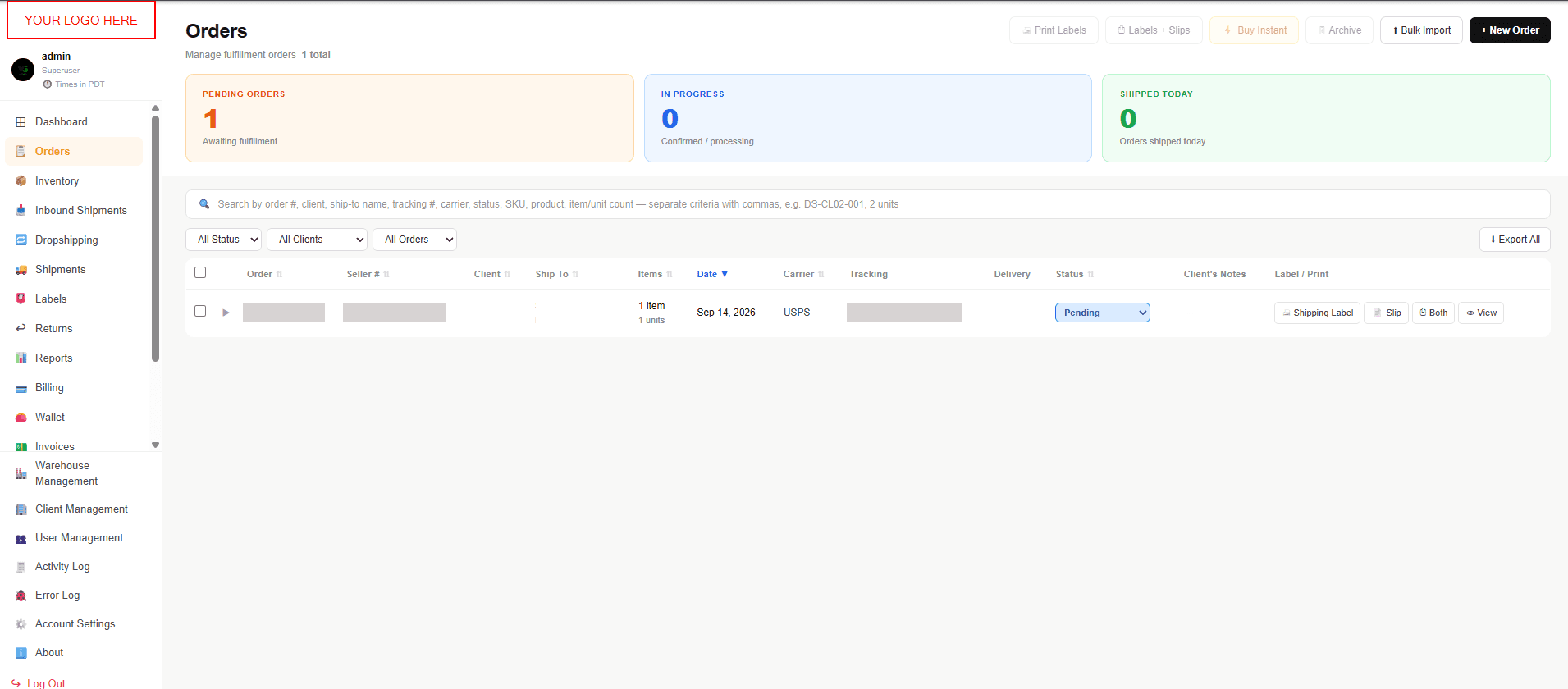
Client orders come in from the portal or a CSV, reserve stock the moment they’re accepted, and go out with a label and a packing slip bought in the same click.
- Order intake from portal, CSV/XLSX or staff entry
- Reservation on accept; sold on ship
- Multi-carrier rates via EasyPost, postage at cost
- One-click label + packing slip, or bulk “Labels + Slips”
- Client-supplied labels accepted (upload)
- Tracking number stored and shown to the seller
- Order states: pending → in progress → shipped, with cancel
- Returns intake with return fees
03
Vendor-direct / dropship orders
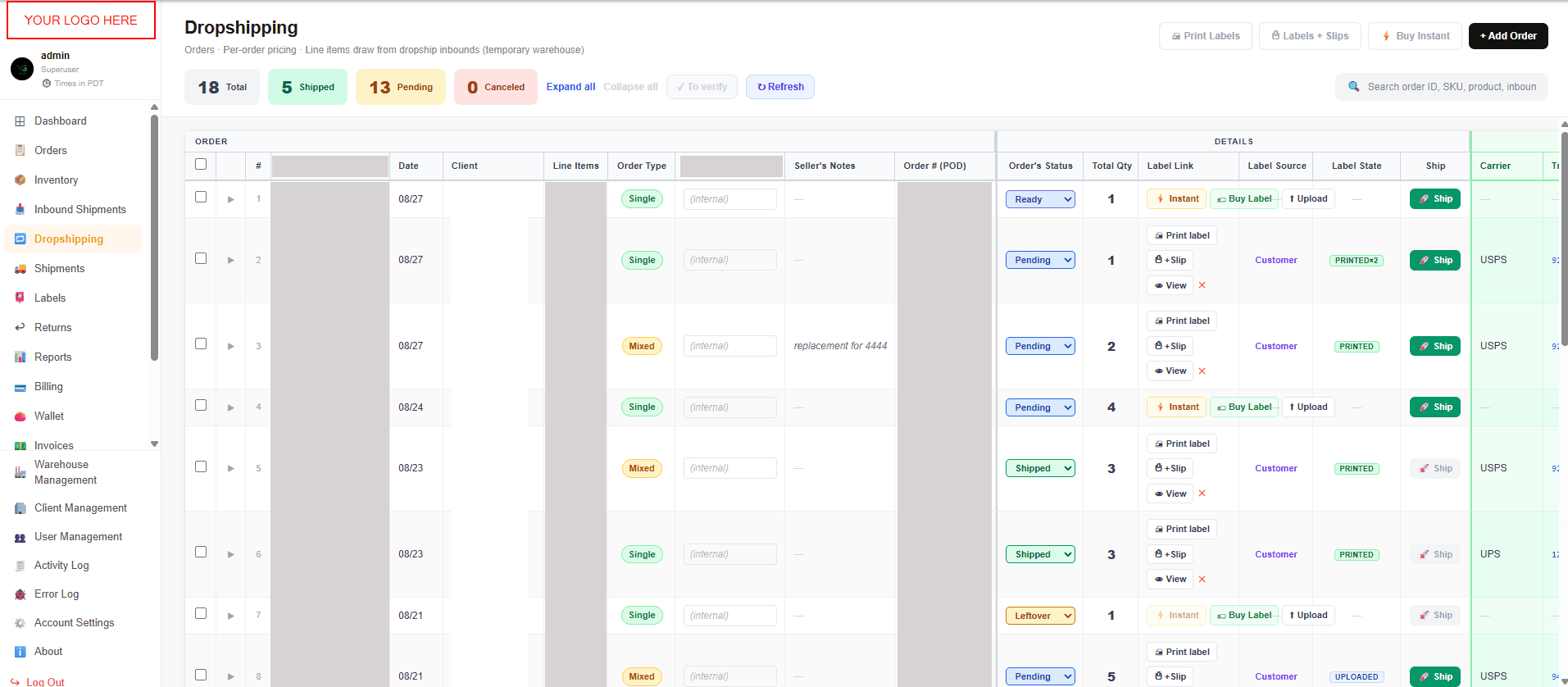
A dropship order is its own operational path inside the same client and order model — not a routing rule bolted on from the ecommerce side.
- Own queue, own inbound pool (temporary warehouse)
- Line items draw from dropship inbounds, not shelf stock
- Single and mixed orders
- Per-order dropship pricing, billed to the wallet
- Label source: instant buy, buy label, or customer upload
- Label state tracked: uploaded → printed → shipped
- Leftover units stay visible after the order
- Seller notes and internal notes per order
04
Inbound receiving
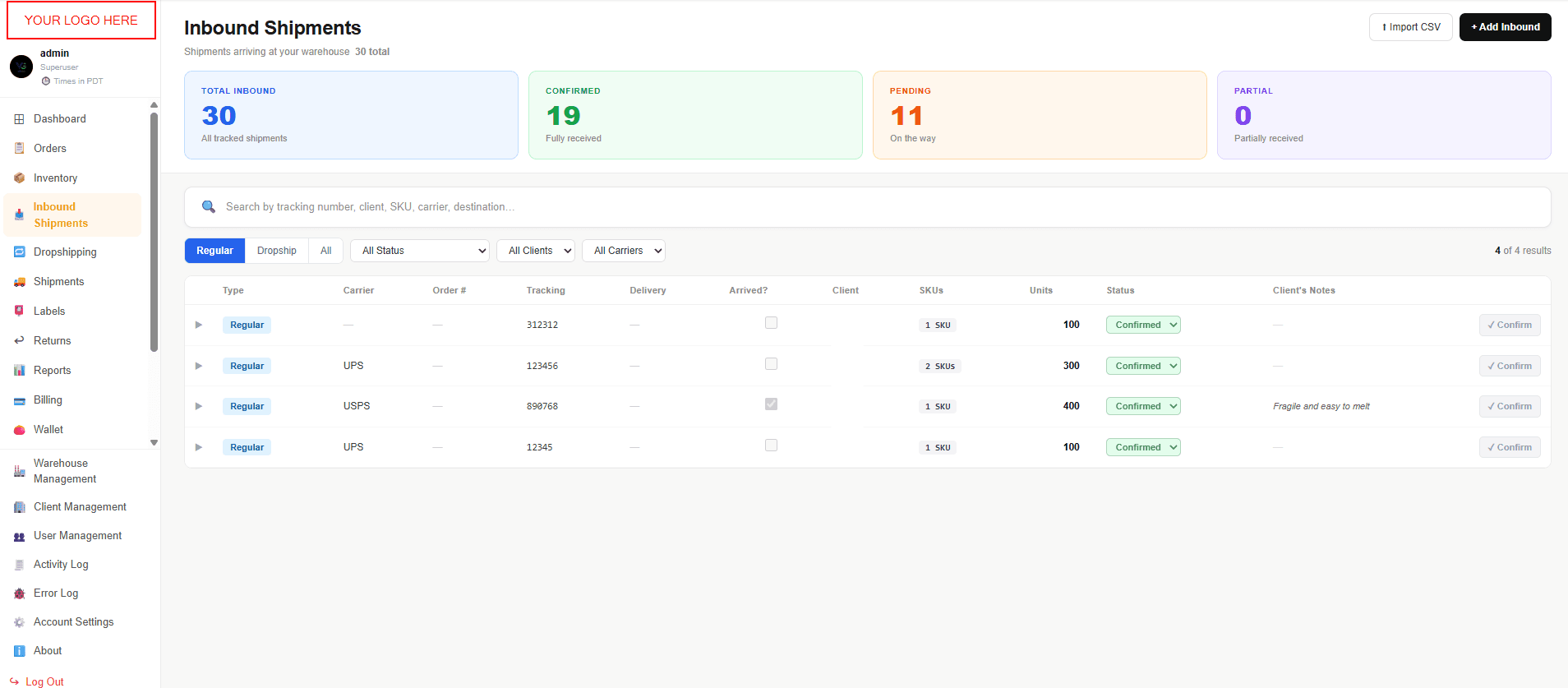
What the client says they sent, what actually arrived, parcel by parcel and SKU by SKU — so shortages surface before the client asks.
- Regular and dropship inbound types
- Carrier + tracking per shipment
- Per-parcel and per-SKU expected vs received
- Partial receipt state
- Client notes (“fragile, easy to melt”) on the record
- Confirm step writes to stock and to the audit log
- Receiving fees post to the wallet on confirm
- CSV import of inbound manifests
05
Client portal
Each seller logs in and sees only theirs: stock, orders, shipments, inbounds and money. You stop being their reporting department.
- Scoped to the seller’s SKUs, orders and wallet
- Place stock or dropship orders; upload a CSV
- Live tracking on every shipment
- Inbound status: sent, arrived, short
- Wallet balance and every charge, itemized
- Invoice history
- Their own users, with roles
- Same database as your floor — nothing to sync
06
Billing, wallet & invoices
Charges post as the work happens. The invoice is the ledger, priced — every line opens to the event that created it.
- Storage fee tiers by pallet/bin, per client or global
- Per-order pick/pack and dropship handling fees
- Receiving per parcel; return fees
- Postage pass-through at cost, no markup
- Wallet ledger per client with running balance
- Credits and adjustments, always with a reason
- Month-end invoice generation in one click
- Revenue and postage spend by month, by client
07
Audit log, roles & imports
Every change, by whom, when, from what to what. Permissions by role. Bulk in and out so nobody retypes a catalog.
- Full activity log across inventory, orders, billing
- Error log for failed labels and rejected writes
- Role-based permissions: owner, staff, client users
- User management for your team and each seller’s
- Bulk CSV/XLSX import: products, orders, inbounds
- Export CSV of inventory and orders any time
- Client management: rate card, contacts, settings
- Times shown in your warehouse’s zone
08
Dashboard & reporting
Today at a glance for the owner; the operations strip for the floor; trends for the month.
- Orders today: regular vs dropship; pending queue
- Units shipped today; open inbounds; active clients
- Revenue this month; return fees this month
- SKUs, units available, reserved, unsellable
- Stock value on hand; postage spent
- Weekly order volume: created vs shipped
- Revenue, last seven days
- Order status breakdown and recent orders
In production, not a prototype.
Client details redacted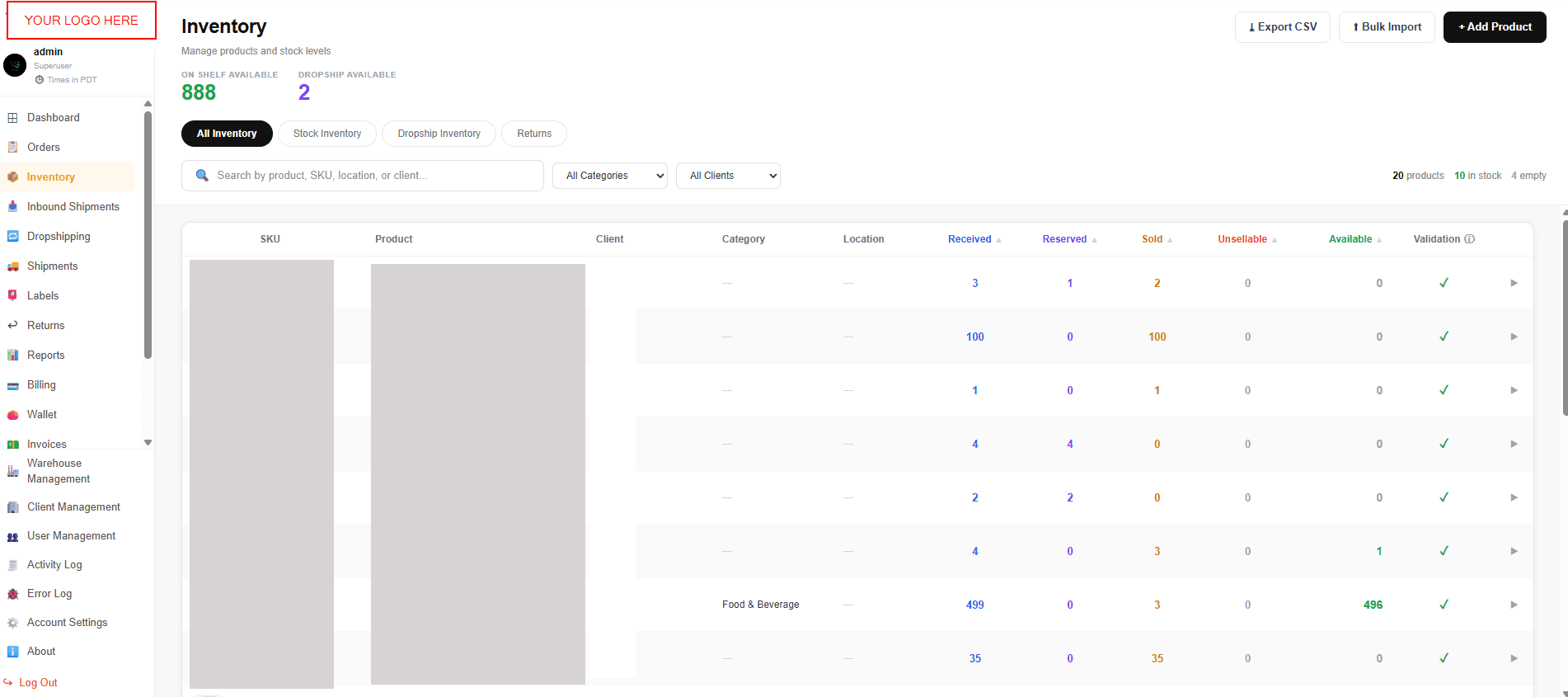
09 · Not in it yet
Ask before you assume.
Things operators ask about that we either don’t have or handle a specific way today. Bring these to the call; we’d rather lose a deal than surprise you after the migration.
Sales-channel integrations
Shopify, Amazon, WooCommerce, Walmart — orders come in by CSV today. Direct connectors are the first thing we build with design partners.
Accounting export
Invoices and ledger export as CSV; no QuickBooks or Xero sync yet.
Barcode scanning / mobile
Web app works on a tablet; no dedicated scanner workflow yet.
Carriers
Rates and labels via EasyPost (USPS, UPS, FedEx and more). Your own carrier accounts connect through it.
Lot / serial / expiry, EDI
Not supported. If you need regulated inventory or 940/945 retail compliance, we are not your WMS today.
Multi-warehouse
Built for one site per account today; multi-site is the Scale tier’s first commitment and ships with its first customer.
See it on your data.Bring one client, one month.
Or leave your details and we will come to you.